Las Azaleas, Tucson’s all-female mariachi group, highlights music led by women
"Bésame Mucho" helped pave the way


Pictured are Las Azaleas performing during the All Souls Procession final ceremony. Photo by Warren Van Ness
Long before Diana Olivares started a band of her own, she knew she wanted to highlight Latin music composed or popularized by women.
“I come from a mariachi background where there’s a lot of really incredible, amazing men like José Alfredo Jiménez and Vicente Fernández — all these men who really laid their stake in the mariachi genre,” Diana says. “But then I learned ‘Bésame Mucho’ was composed by a woman and I was like, ‘I love that song, the world all over loves that song.’ To learn it was composed by a woman — a girl actually, she was 15 or 16 when she wrote it — and she was Mexican? I thought, ‘She is me.’ If I didn’t know the origins of that song, who else doesn’t? How many women out there are composers and artists? How much of their music is out there and we don’t really know their backstory?”
In 2020, deep in the pandemic days, Diana was giving singing lessons through Zoom. When restrictions began to lift, she decided to get together with some of those singers to explore music in person.
She didn’t necessarily set out to start a band, but a band is what happened anyway.
“I keep calling it like my little pandemic project. As a musician in town when the pandemic hit, gigs were canceled left and right. I was getting booked more for classical singing gigs and I hadn’t done mariachi in a few years,” Diana says. “I had a long history with mariachi music before that and I really missed it. I always wondered if I were to start my own thing, how would I organize things and run things? I had lots of time to think about what I would do and how I would do it.”
What happened as a result of those jam sessions is Las Azaleas, an all-female mariachi group. The band now includes Diana along with Azul Navarrete-Valera, Isabel Verdugo, Yvette Lanz and Rebecca Leon.
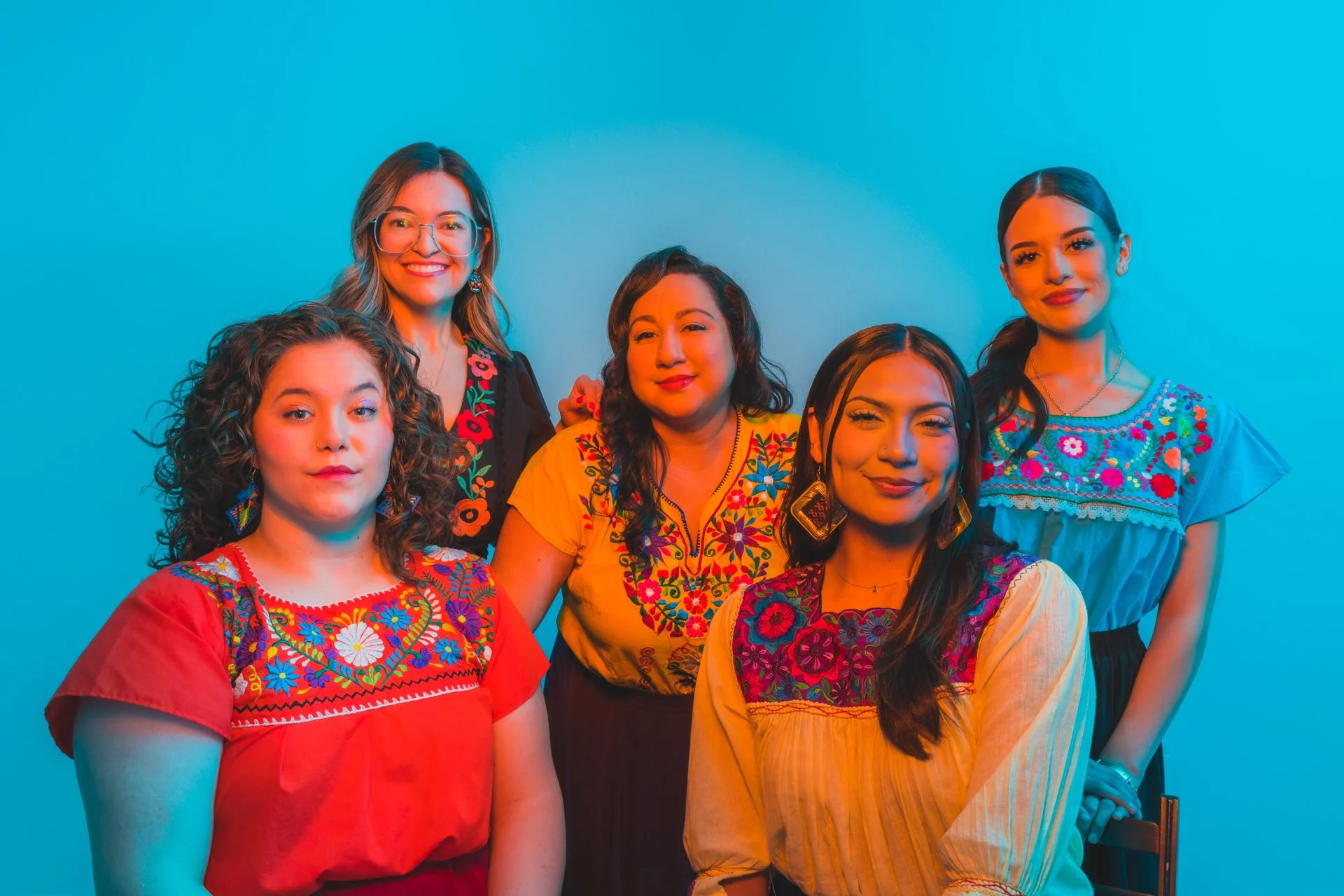
Las Azaleas began in 2020. Photo by Chris Summit
“I didn’t set out for this to be a woman-led project like that but it started taking shape to be that as I realized all the people I was calling to jam with me were girls,” Diana says.
Together, the five musicians play all sorts of music but especially Latin tunes led in some form by women.
“The majority of the songs we decided to learn and perform come from a place of, ‘Ooh, who else do we want to shine a spotlight on? Which woman’s music should we share with Tucson?’” Diana says.
This year, Las Azaleas is also experimenting with original music. They’ve composed some songs in the past, but haven’t ever written their own lyrics.
“It’s about what we want to communicate — whether it sees the light of day or not,” Diana says. “A lot of mariachi is about heartbreak and there’s a place for that, so it might be that we come up with something just about heartbreak or maybe we do something different. But we’ll try to be intentional about it.”

Pictured is Azul Navarrete-Valera singing at the Fox Theatre. Photo by Christian B Meza
Mariachi groups were historically led by men, but that’s seen a shift. In Tucson specifically, it’s more common to find groups that blend men and women rather than all-male mariachis.
But Las Azaleas is one of the first — if not the first — all-female mariachi in Tucson. (And the name quite literally came to Diana in a dream. “I wasn’t a particular fan of azaleas but now I am, obviously,” she says.)
“We’re inspired by what we see,” Diana says. “Las Azaleas (being women-led) is a little novel still. I just hope that at some point, it won’t be as novel. I hope that it won’t be, ‘Oh it’s all girls’ but will (instead be) ‘Oh, it’s a great band.’ It’s novel to the adults around us who aren’t used to it, but to kids who show up, all they see is a cool band.”

Pictured are Las Azaleas during a Selena sing-along “Como la Flor” show. Photo by Christian B Meza
Diana has been part of Tucson’s mariachi community for more than two decades, beginning late in high school. This was her 20th year being an instructor at the Tucson International Mariachi Conference and she was part of Mariachi Sonido de México for 10 years.
“All of that helped me learn. I observed how prior directors of mine ran their groups and handled clients and musicians. I learned the style of mariachi, how to approach mariachi, what it means to be a mariachi musician,” Diana says. “I am vocally trained — I learned from wonderful wonderful teachers both at the University of Arizona and outside of the University of Arizona, and because of my experiences on stage through operas and classical singing. So when it comes down to me starting (Las Azaleas), I’m doing it from what I’m learned, from what I’ve observed others do and what I’m changing to fit my own style.”
If you asked Diana a decade ago what her favorite part about playing music is, her answer might have been different than it is now. The answer has changed over the years, but now her favorite thing is the connection she has with her fellow bandmates.
“We come together and make some noise and that noise works with one another and we get to share that with an audience. That’s amazing,” Diana says. “It seems to have an impact on our audiences and that’s cool because we don’t set out to do that. My favorite part is the connection and how this is something I’m doing with friends.”
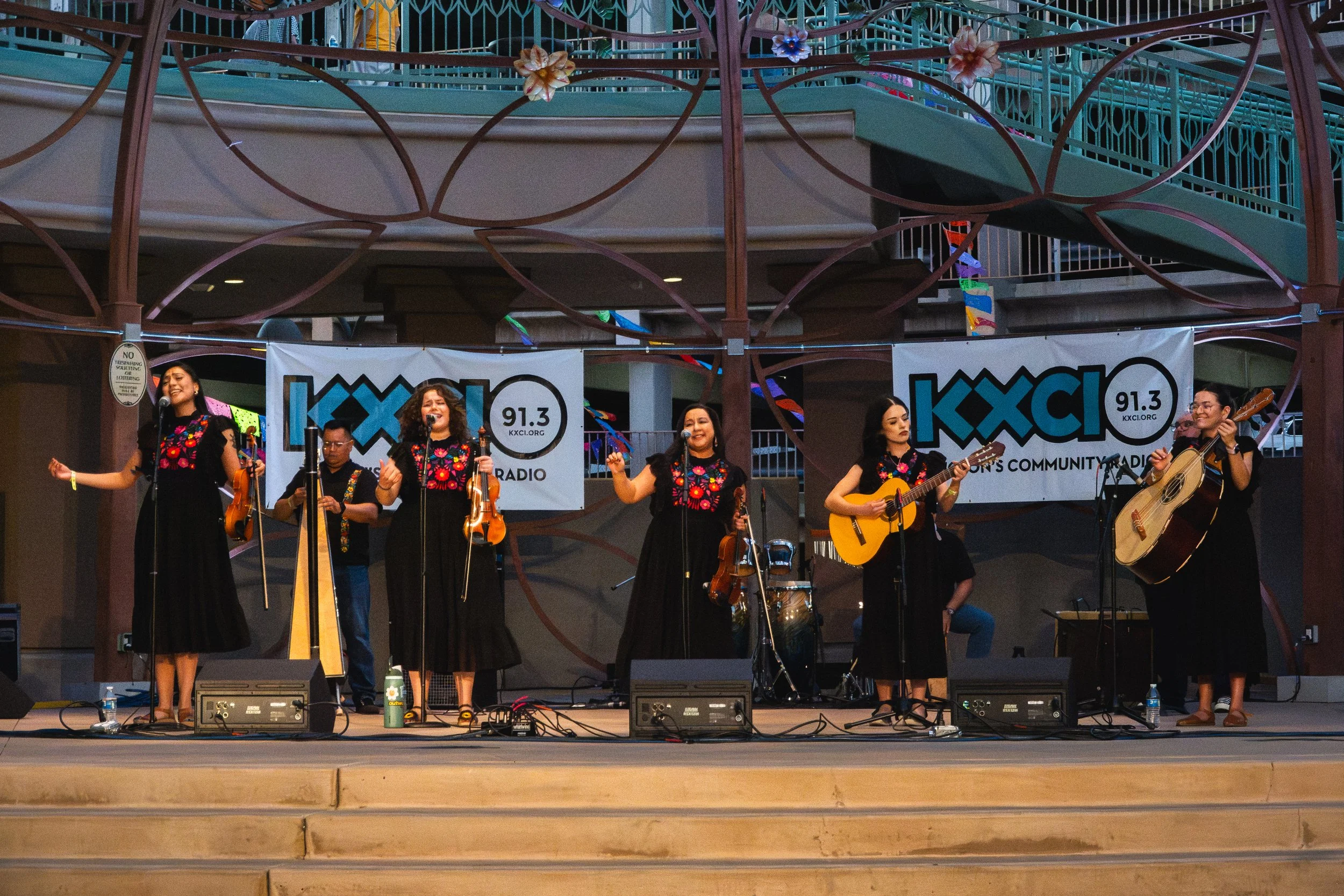
Pictured are Las Azaleas performing during KXCI’s Baila el Pueblo. Photo by Chris Summit
Diana’s favorites
Here are three musicians Diana is inspired by:
Linda Ronstadt — “I’m a huge fan of Linda Ronstadt and all she did in the world of mariachi. She really made it popular and mainstream in America because mariachi is niche. It’s not a super popular genre. It is in Tucson. Thankfully, there’s a big love for mariachi here, but it’s not generally this major genre in the U.S. or the world. Linda Ronstadt being from Tucson and the music she selected and the arrangements, she really did mariachi so so well.”
Natalia Lafourcade — “She has not released mariachi tunes but there’s a lot of music especially on her Musas albums that lend themselves to some really beautiful Veracruz-style mariachi-adjacent songs. Love her songwriting, love her singing, love the way she communicates her storytelling, love everything about her.”
Eydie Gormé — “This one is a little random. She’s a major American pop star from decades past but she had a big crossover moment. I love her voice, I love her singing and her approach.”
For current artists, Diana is loving RAYE.